

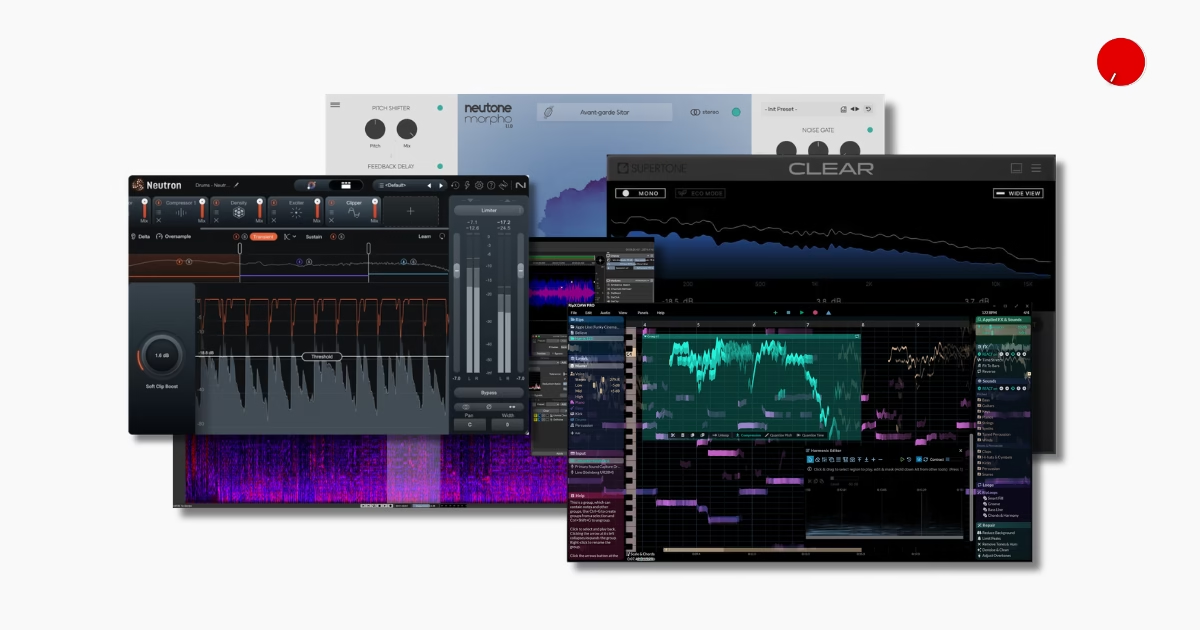
In 2026, AI is everywhere, but most plugins are just noise. These 7 actually earn a spot in your sessions, picked by working producers.
If you search for “AI music production” on YouTube, you will find a lot of videos that claim artificial intelligence can now produce hit songs, replace musicians or master your tracks with a click. This sounds really exciting. It is not how most music producers actually work.
The truth is that music production is not as glamorous as it seems. The AI tools that are really changing music production are not writing top-notch melodies or replacing engineers. They are solving the technical problems that interrupt creativity, like cleaning up noisy recordings, separating different parts of a song, extracting MIDI files, restoring damaged audio and making sampling more efficient.
One area where people are still talking more than doing is AI mastering. Even though AI mastering has been developed for years, it is still not as good as a human mastering engineer. Mastering is a process that requires a lot of context, dynamics, genre, sequencing and artistic intent. While AI mastering can generate a reference or demo master, it still lacks the judgment required to make nuanced decisions. Most music producers use these tools as placeholders rather than final solutions, which makes it hard to justify using them when you could be investing in proper monitoring, better mixes or an experienced mastering engineer.
Luckily, AI is being used in areas of music production. These are the tools that are really earning a place in music producers’ workflows.
Here’re the 7 best AI Plugins for Music Producers:
- Ultimate Vocal Remover (UVR5)
- Serato Sample
- Steinberg – SpectraLayers
- Supertone – Clear
- Hit’N’Mix – RipX DAW
- Neutone – Morpho
- iZotope Neutron 5
1. Ultimate Vocal Remover (UVR5):
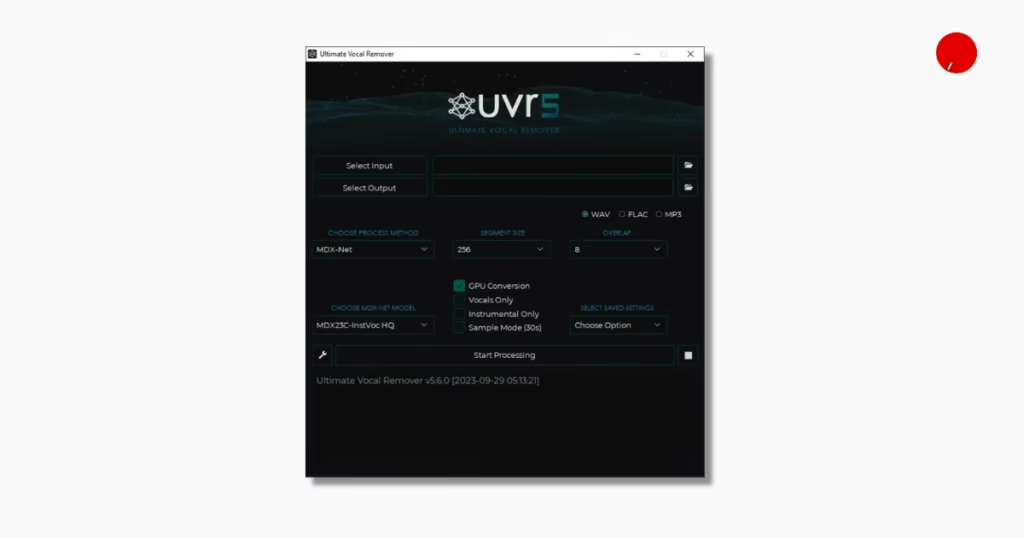
There is one AI application that deserves a lot more attention than it gets, and that is Ultimate Vocal Remover or UVR5. Ultimate Vocal Remover is built around open-source source-separation models like Demucs and MDX. Ultimate Vocal Remover allows music producers to isolate vocals, drums, bass and instrumentals from songs with remarkable accuracy. Unlike subscription-based services, Ultimate Vocal Remover runs locally on your computer, which makes it both free and incredibly powerful. For hip-hop music producers, remix artists and DJs, Ultimate Vocal Remover has fundamentally changed sampling.
Records that were once impossible to sample because of vocals or layered instrumentation can now be broken down into workable parts within minutes. No stem separation tool is perfect on dense mixes with heavy reverb or analogue distortion, but Ultimate Vocal Remover consistently does a great job. That is precisely why Ultimate Vocal Remover has become one of the recommended AI tools across music producer communities on Reddit and music forums.
2. Serato Sample:
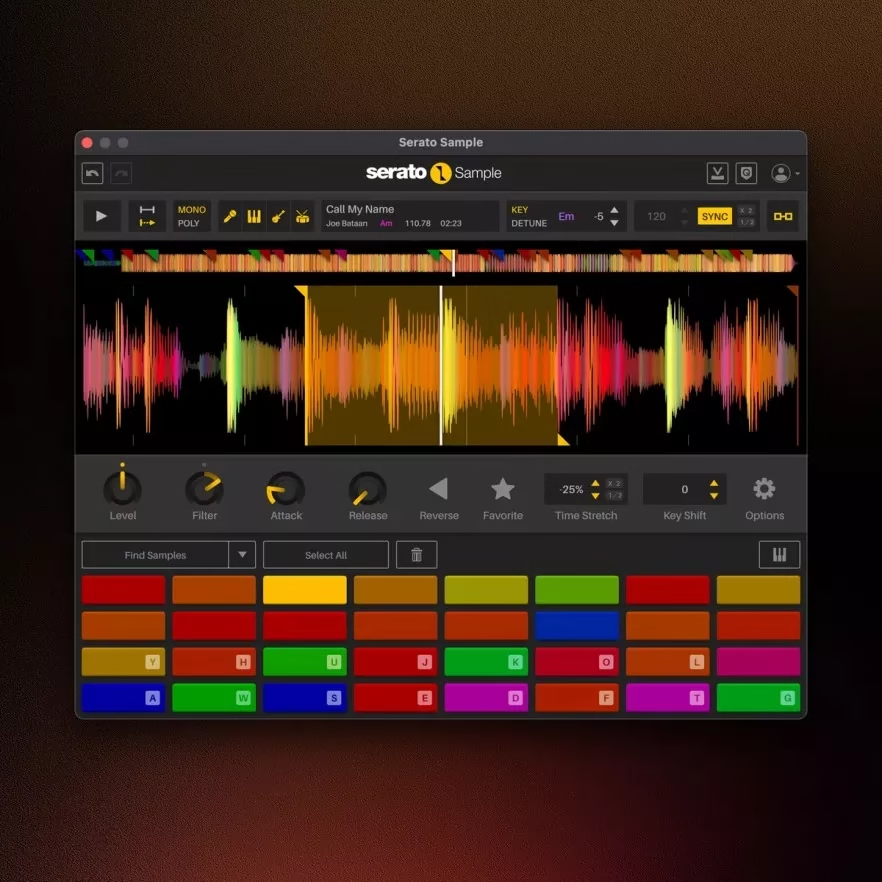
Few plugins have had as much impact on modern sampling workflows as Serato Sample. This plugin was originally known for its fast sample chopping, pitch detection and time-stretching. Recent updates introduced machine-learning-powered stem separation inside the plugin. That small addition has transformed how many music producers approach digging through records.
The beauty of Serato Sample is not simply that it can isolate vocals, drums, bass and melodies. Several applications can do that. The real strength of Serato Sample is that stem separation exists inside the workflow itself. A music producer can drag in a record, separate its parts, detect the key and tempo, create cue points, chop the sample, and immediately begin building a beat without switching between pieces of software.
For music producers working in boom bap, soul, lo-fi or experimental hip-hop, this dramatically reduces the friction of spending an hour trying to EQ drums out of a sample or searching for an instrumental version online; they can stay focused on making music. Like every source-separation model, Serato Sample is not flawless. Complex recordings can still produce artefacts, and dedicated separation software like Ultimate Vocal Remover often delivers cleaner extractions when maximum quality is required. Music production is not always about perfection. It is about momentum. Serato Sample keeps music producers in a state, and that is exactly where AI provides its greatest value.
3. Steinberg – SpectraLayers:
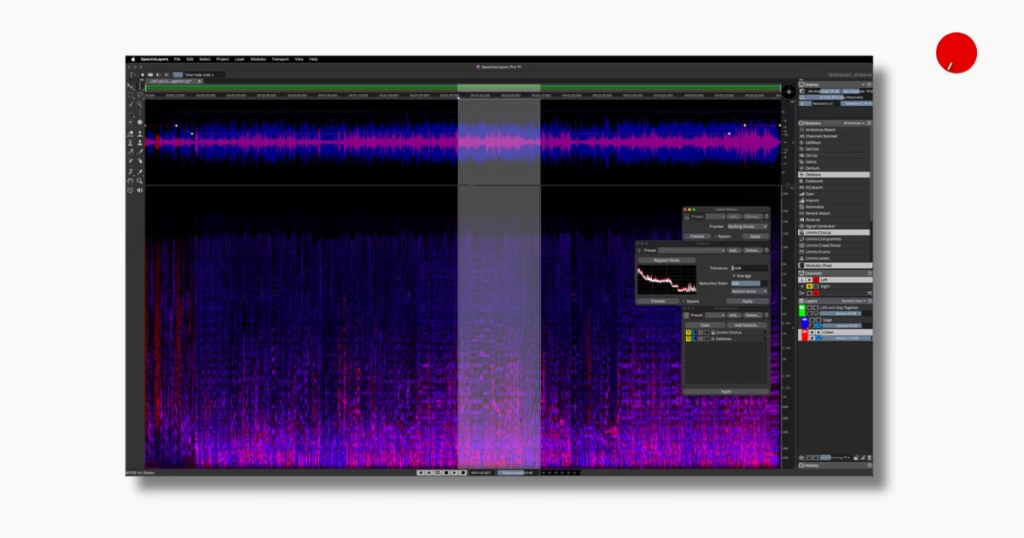
Some plugins solve problems. SpectraLayers solves problems you did not think could be solved. Rather than displaying audio solely as waveforms, SpectraLayers presents recordings as editable frequency spectrums. Using AI-assisted selection tools, music producers can isolate vocals, ambience, unwanted noises and individual instruments with precision. That means removing guitar string squeaks without affecting the performance, eliminating audience coughs from recordings, reducing microphone bleed or repairing damaged archival audio that would previously have been considered unusable. For engineers working with podcasts, recordings, film audio or restoration projects, SpectraLayers feels less like a plugin and more like Photoshop for sound.
4. Supertone – Clear:
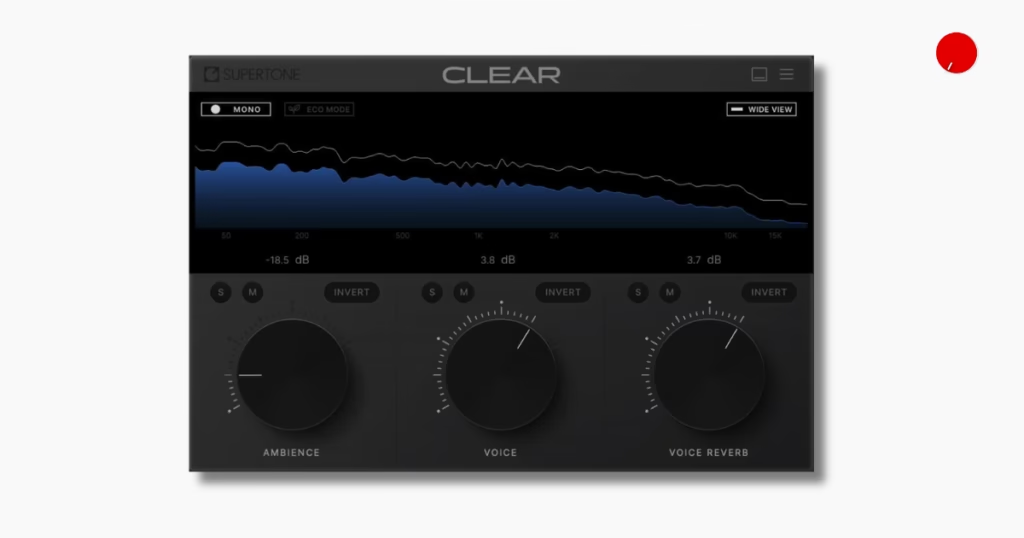
Most musicians are not recording inside world-class studios. They are recording in bedrooms, apartments, rehearsal spaces and makeshift home studios where traffic, air conditioners, keyboard clicks and room reflections inevitably become part of the recording. Supertone Clear has quickly become one of the respected AI restoration tools because it separates voices from background noise while preserving the natural tone of the performance. Unlike noise reduction plugins that often leave metallic artefacts behind, Supertone Clear focuses on retaining clarity without making vocals sound processed. Good recording practices will always matter more than software. When a brilliant vocal take is ruined by an unpredictable environment, Supertone Clear often makes the difference between deleting the session and releasing the song.
5. Hit’N’Mix – RipX DAW:
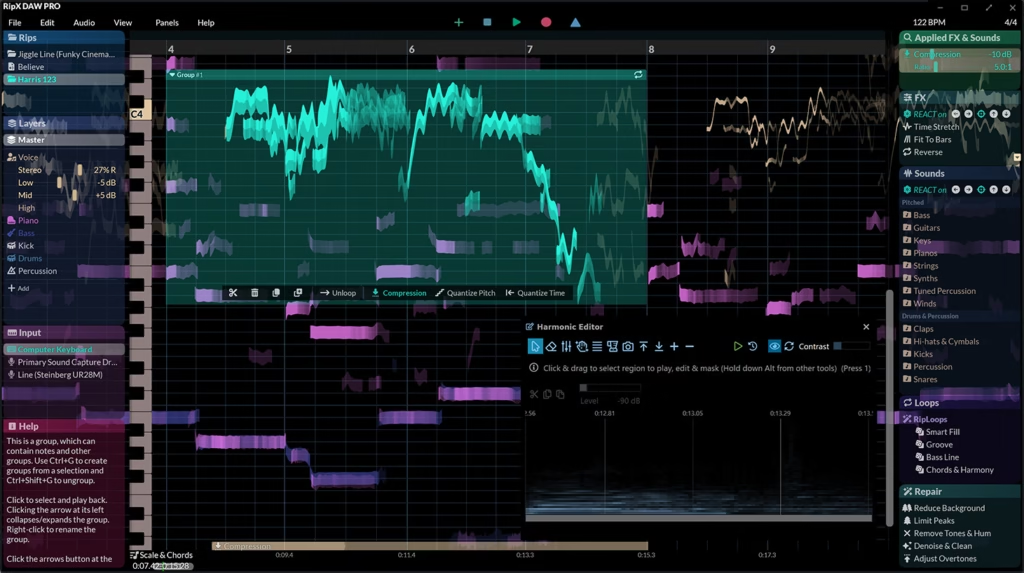
RipX occupies one of the unusual corners of AI music production. It doesn’t simply separate stems; RipX analyses recordings at a note-by-note level, allowing music producers to edit pitch, timing and performances inside completed audio files. Imagine correcting one bass note in an exported mix, adjusting the timing of a guitar phrase after the original session has disappeared or extracting melodic ideas from old bounced demos whose project files no longer exist. These are not situations. Every music producer eventually encounters them. RipX exists for those moments when conventional editing reaches its limits.
6. Neutone – Morpho:
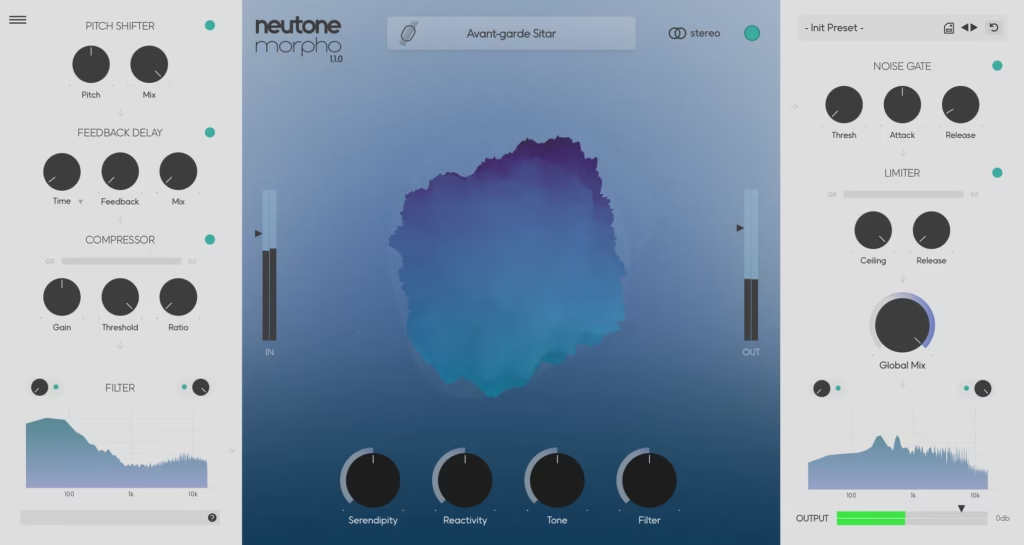
Much of the conversation around AI focuses on automation. Neutone takes a different path entirely. Neutone allows music producers to run neural audio models directly inside their DAW, transforming sounds in ways traditional digital signal processing cannot easily achieve. Instruments can inherit textures, voices can be reshaped into unfamiliar sonic spaces, and recordings can be processed using machine-learning models trained on entirely different sound sources. For music producers interested in music, sound design or electronic production, Neutone feels less like an assistant and more like an entirely new instrument. Its greatest strength is not efficiency. It is
experimentation.
AI Works Best When It Stays Out of the Way. Perhaps that is the lesson from the current state of AI music production. The valuable AI tools are not trying to become music producers. They are trying to become invisible. The music industry’s attention remains fixed on text-to-song generators and software promising to replace artists. That is not where AI is making its biggest contribution. The real breakthroughs are happening in the background, quietly removing barriers that once slowed the creative process.
Whether it is separating stems from a fifty-year-old soul record, rescuing a vocal recorded in a noisy bedroom, repairing damaged audio or turning an improvised melody into editable MIDI, today’s best AI tools do not make creative decisions for music producers. They simply remove the obstacles that prevent those decisions from happening. For all the conversation surrounding intelligence, that is where its greatest value currently lies. Not in replacing human creativity but in giving music producers more time to exercise it.
7. iZotope Neutron 5:
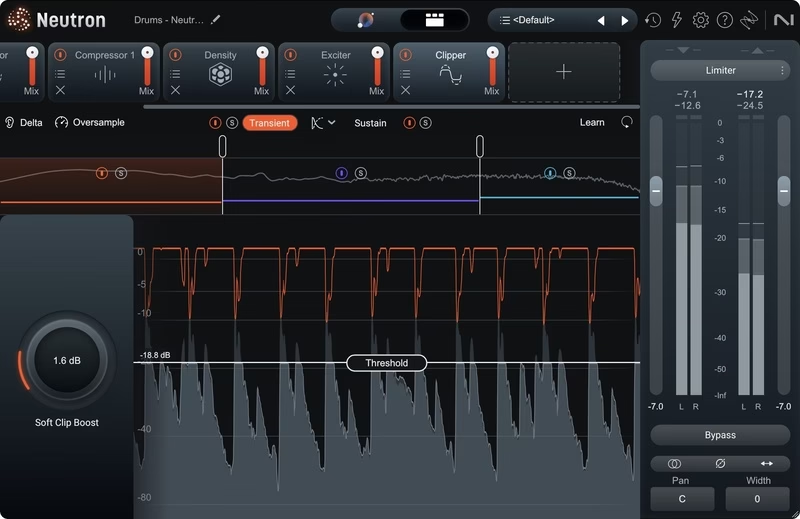
Lastly, we have iZotope Neutron 5 on our list. It’s an AI-powered mixing suite designed to help producers get cleaner, more balanced mixes without spending hours tweaking every parameter. Its latest updated mix assistant analyzes your track and creates a tailored starting point, while tools like unmask help tackle frequency clashes between instruments. Neutron 5 also packs a Clipper, Density, Phase, Sculptor, Transient Shaper, Exciter, Gate, Compressor, and Equalizer, along with Mid/Side and Transient/Sustain processing modes, Delta monitoring, and Visual Mixer & Relay for better control over the overall mix. It’s useful for both beginners and experienced producers who want to speed up their workflow without giving up creative control.
- 10 VST Plugins Fred Again.. Uses To Make His Records
- The Best VST Plugin Deals in Summer 2026? (Updated List)
- 7 AI Plugins That Will Actually Make You a Better Producer in 2026
- Native Instruments Officially Joins inMusic Alongside Akai Pro and Moog
- Soundtoys 5.5 Bundle Is 50% Off Right Now, and It’s Hard to Ignore




1 Comment
Comments are closed.